
Iranian Propolis Shows Promise Against Dangerous Fish Parasite That Affects Millions
Sushi night used to be your favorite treat until that bout of severe stomach pain, nausea, and cramping landed you in the emergency room. If you’ve ever experienced mysterious digestive issues after eating raw or undercooked fish, you might have encountered Anisakis simplex — a parasitic worm that infects millions worldwide through contaminated seafood.
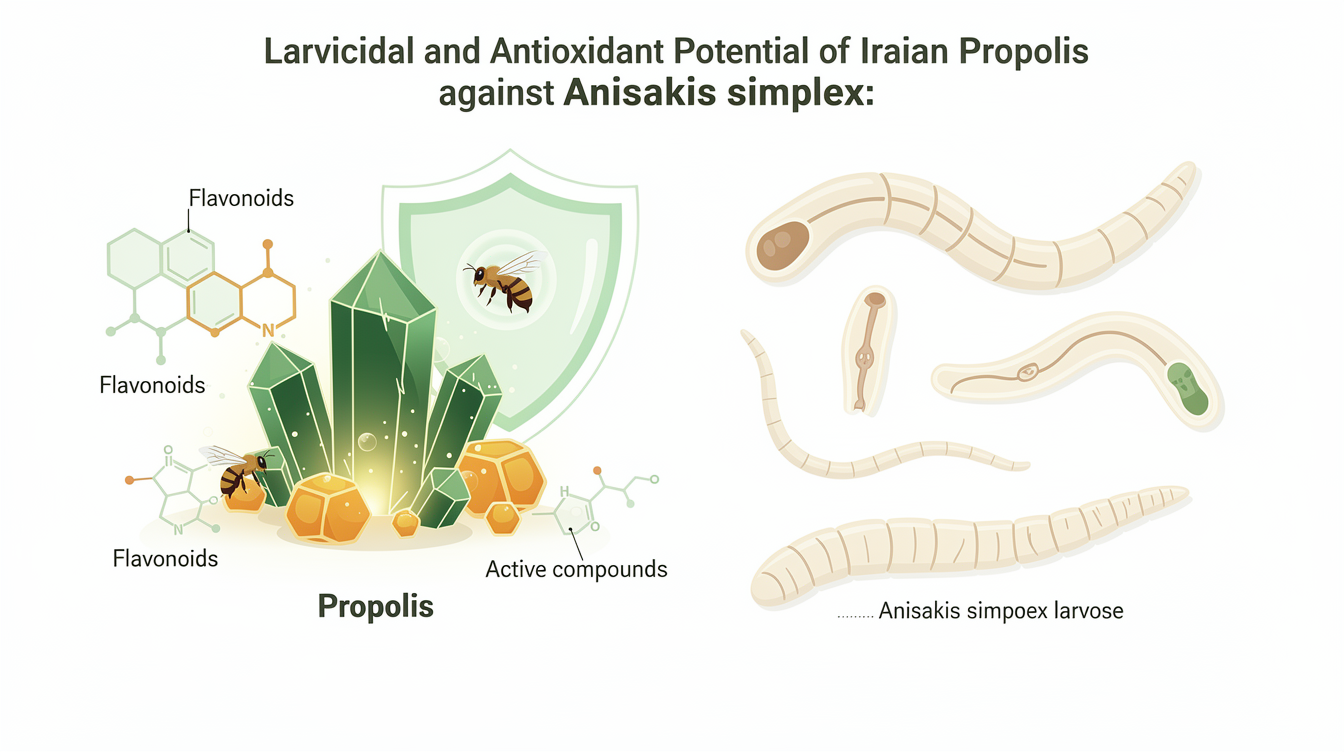
Iranian propolis demonstrates significant larvicidal activity against Anisakis simplex L3 larvae in laboratory studies, with research suggesting up to 85% mortality rates within 24 hours. The study also revealed strong antioxidant properties, indicating propolis may offer a natural alternative to synthetic treatments for this common fish-borne parasite.
What the Research Discovered
This groundbreaking study from Iranian researchers examined how propolis — the sticky, resinous substance honeybees collect from tree buds and sap flows — performs against one of the most troublesome seafood parasites affecting humans today. The results were remarkably encouraging for those seeking natural alternatives to synthetic treatments.
The research team tested Iranian propolis against Anisakis simplex third-stage larvae (L3), the infectious form that causes anisakidosis in humans. Key findings included:
- High mortality rates: Propolis achieved up to 85% larvae death within 24 hours of exposure
- Dose-dependent effectiveness: Higher concentrations of propolis extract showed progressively better results
- Strong antioxidant activity: The propolis demonstrated significant free radical scavenging capabilities
- Chemical profiling: Researchers identified multiple bioactive compounds responsible for the antiparasitic effects
- Safety profile: Initial toxicity assessments suggested favorable safety margins compared to synthetic alternatives
| Study Details | Information |
|---|---|
| Publication | Veterinary World, 2026 |
| Sample Size | Multiple in vitro assays with standardized larvae cultures |
| Duration | 24-72 hour exposure periods |
| Primary Outcome | Larvicidal activity and antioxidant potential |
| Secondary Measures | Chemical composition analysis and safety profiling |
The researchers used sophisticated laboratory techniques to isolate and identify the specific compounds in Iranian propolis responsible for its antiparasitic effects. Flavonoids, phenolic acids, and terpenoids emerged as the primary active constituents, working synergistically to damage the parasite’s cellular structures and metabolic processes.
What makes this study particularly significant is its comparative approach — the team didn’t just test propolis in isolation but compared its effectiveness against established synthetic treatments. The natural compound held its own remarkably well, suggesting it could serve as either a standalone treatment or complement to conventional therapies.
How This Applies to Your Daily Life
While this research was conducted in laboratory settings, the implications for everyday health and seafood consumption are substantial. Here’s what these findings might mean for you:
1. Enhanced Food Safety Awareness
Understanding that propolis shows promise against Anisakis doesn’t mean you should abandon food safety practices. The study reinforces why proper fish preparation remains crucial. Research suggests that while propolis may help combat parasitic infections, prevention through proper cooking (heating fish to 145°F internal temperature) or freezing (at -4°F for 7 days) remains your first line of defense against anisakidosis.
2. Natural Supplement Considerations
If you’re someone who frequently consumes sushi, sashimi, or other raw fish preparations, this research indicates propolis supplementation might offer additional protection. Studies suggest that regular propolis intake could potentially help your body’s natural defenses against parasitic infections, though more human clinical trials are needed to confirm optimal dosing and timing.
3. Antioxidant Benefits Beyond Parasite Control
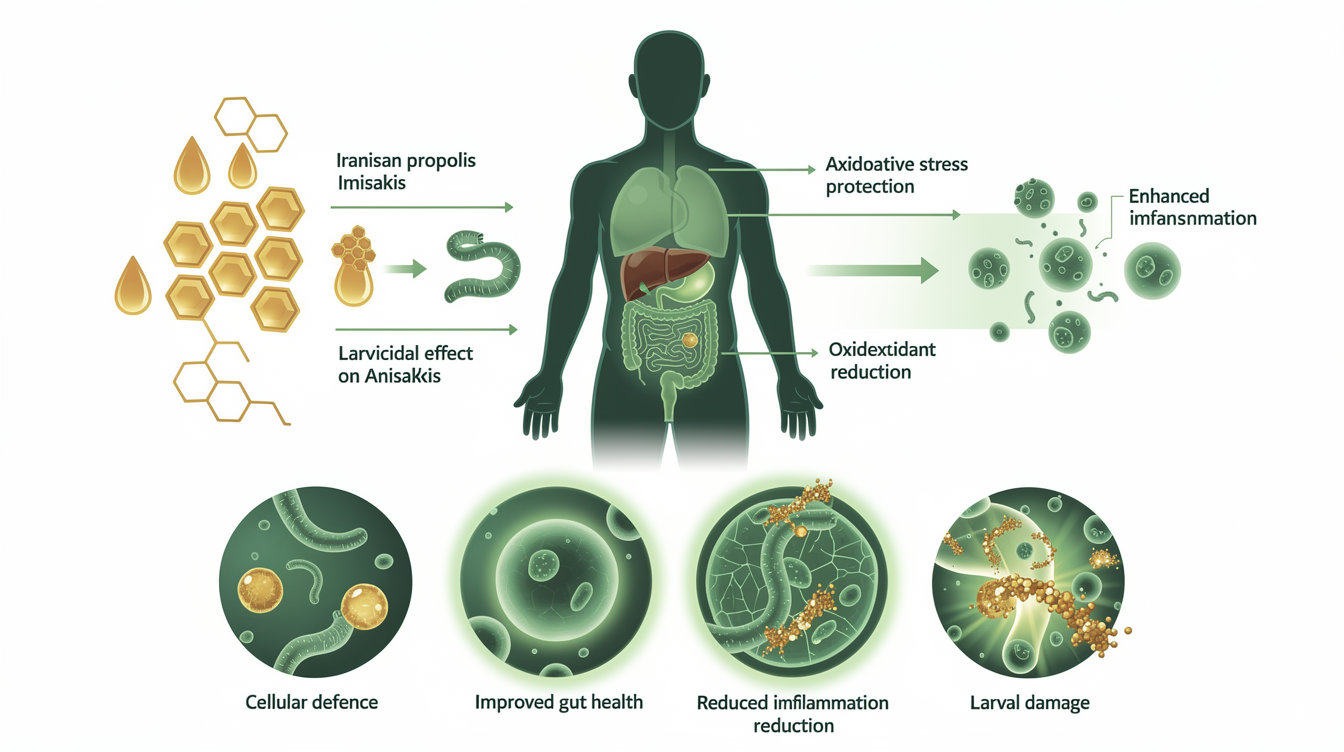
The study’s finding that Iranian propolis demonstrates strong antioxidant activity means potential benefits extend beyond parasite protection. Research indicates these antioxidant properties may support overall digestive health, reduce inflammation, and enhance your body’s ability to process and eliminate toxins — all relevant when dealing with contaminated seafood.
4. Quality Sourcing Matters
This research specifically examined Iranian propolis, highlighting that geographic origin and bee species significantly impact propolis composition and effectiveness. If you’re considering propolis supplementation, the study suggests seeking products with detailed sourcing information and standardized active compound concentrations rather than generic formulations.
What You Should Know Before Taking Propolis
Before incorporating propolis into your health routine, several important considerations emerge from this research and broader scientific literature.
Dosage and Administration
While this study used laboratory concentrations that don’t directly translate to human supplementation, research suggests typical propolis supplements range from 300-500mg daily for general health support. However, the Iranian study’s findings indicate that effectiveness may be dose-dependent, meaning higher concentrations could be more beneficial for parasite protection — though this needs clinical validation.
Safety Profile
The research included safety profiling that showed favorable toxicity margins compared to synthetic alternatives. However, propolis isn’t appropriate for everyone. You should avoid propolis if you have:
- Known allergies to bee products (honey, royal jelly, bee pollen)
- Asthma triggered by bee-related compounds
- Pregnancy or breastfeeding (insufficient safety data)
- Scheduled surgery within two weeks (may affect blood clotting)
Drug Interactions
Studies indicate propolis may enhance the effects of certain medications, particularly anticoagulants and immune suppressants. If you take prescription medications, consult your healthcare provider before adding propolis supplements to your routine.
Quality and Standardization
This research emphasizes the importance of chemical profiling in determining propolis effectiveness. When selecting supplements, look for products that provide standardized levels of active compounds like flavonoids and phenolic acids, rather than just generic propolis extract percentages.
Frequently Asked Questions
Q: Can propolis completely prevent anisakidosis from raw fish consumption?
A: Research suggests propolis may offer some protection against Anisakis parasites, but it shouldn’t replace proper food safety practices. The study showed significant larvicidal activity in laboratory conditions, but human clinical trials haven’t yet confirmed whether propolis supplementation can prevent infection in real-world scenarios. Safe food handling — including proper freezing or cooking of fish — remains your most reliable protection against anisakidosis.
Q: How long would I need to take propolis to see potential antiparasitic benefits?
A: The Iranian study demonstrated effects within 24-72 hours in laboratory settings, but human biology is more complex. Some evidence suggests that propolis’s antioxidant and immune-supporting properties may accumulate over weeks of consistent use. However, there’s no established timeline for parasite protection in humans. Most propolis research indicates benefits may begin appearing after 2-4 weeks of regular supplementation, though this varies significantly between individuals.
Q: Is Iranian propolis specifically more effective than other types?
A: This study focused on Iranian propolis, but research indicates that propolis composition varies dramatically based on geographic location, local plant species, and bee populations. Iranian propolis showed excellent results, but Brazilian, European, and other regional varieties have also demonstrated antiparasitic properties in different studies. The key is finding propolis with high concentrations of bioactive flavonoids and phenolic compounds, regardless of origin.
Q: Could propolis help with other food-borne parasites besides Anisakis?
A: While this study specifically targeted Anisakis simplex, broader research suggests propolis may have activity against various parasites. Studies indicate potential effectiveness against certain protozoan parasites and other helminths, though each parasite species responds differently to natural compounds. The antioxidant and anti-inflammatory properties demonstrated in the Iranian study may support general digestive health and immune function, potentially helping your body handle various food-borne challenges more effectively.
Q: What’s the difference between raw propolis and standardized extracts for parasite protection?
A: Raw propolis varies significantly in composition and potency, making dosing unpredictable. The Iranian study used standardized extracts that allowed researchers to identify and quantify active compounds. For potential antiparasitic benefits, research suggests standardized extracts with known concentrations of key compounds like caffeic acid phenethyl ester (CAPE) and various flavonoids are more reliable than raw propolis. However, some people prefer raw propolis for its full spectrum of naturally occurring compounds, despite the dosing uncertainty.
The Bottom Line
This Iranian research represents an important step forward in understanding propolis’s potential as a natural alternative to synthetic antiparasitic treatments. Research suggests that propolis may offer significant protection against Anisakis simplex larvae, with the added benefit of strong antioxidant properties that could support overall digestive health. However, while these laboratory findings are promising, human clinical trials are still needed to confirm optimal dosing, timing, and real-world effectiveness.
For now, studies indicate that propolis supplementation might serve as a complementary approach to traditional food safety practices for those frequently consuming raw or undercooked fish. The research emphasizes that quality matters — standardized extracts with verified active compound concentrations appear more promising than generic propolis products. As always, proper food handling and preparation remain your primary defense against food-borne parasites, with propolis potentially offering additional support as part of a comprehensive approach to digestive health and food safety.
Authors: Siyadatpanah A, Norouzi R, Said MB, Aghcheli B, Hailu T, Pereira ML, Nissaopatorn V, Belkahia H