
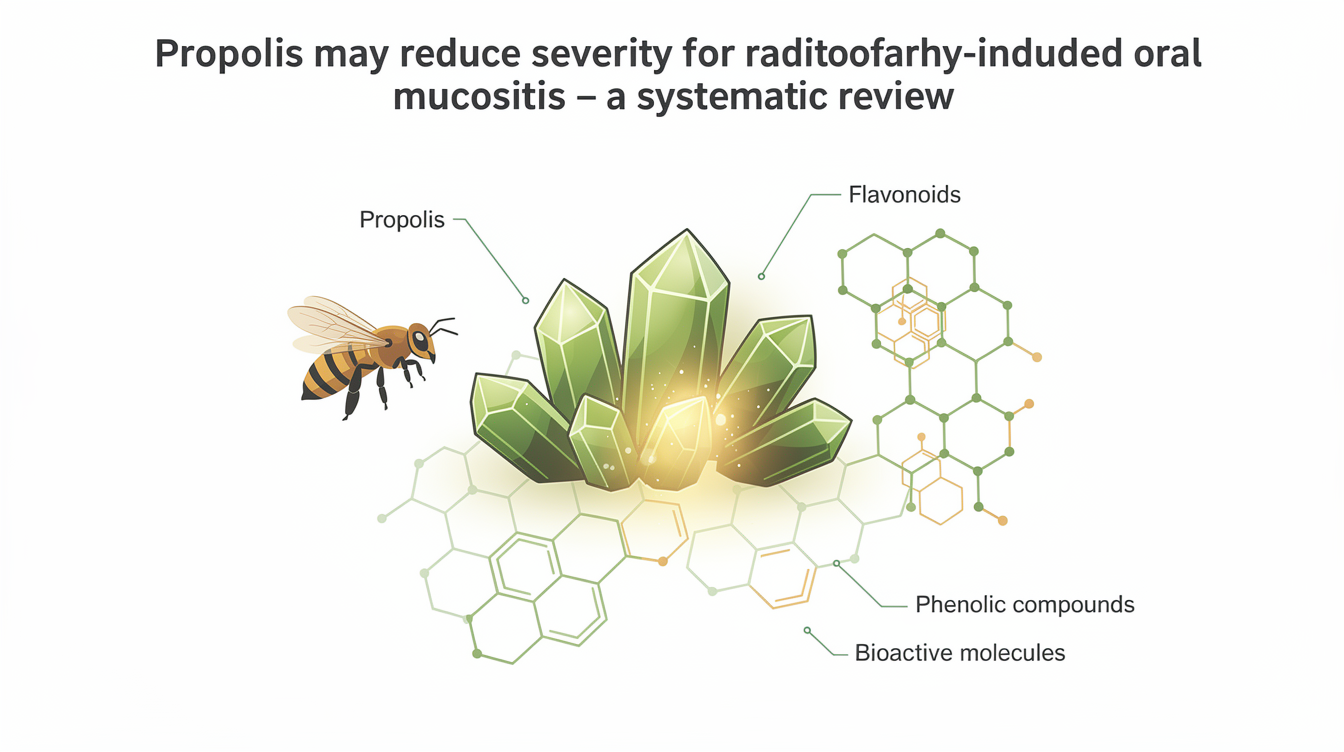
Propolis Shows Promise for Cancer Treatment Side Effects That Affect Your Mouth
If you or a loved one is facing head and neck cancer treatment, you’ve probably heard about the painful mouth sores that can come with radiotherapy. These aren’t just uncomfortable — they can make eating, drinking, and even talking feel like torture, forcing some patients to pause their life-saving treatment just to heal.
Propolis may help reduce the severity of radiation-induced mouth sores (oral mucositis) by up to significant levels, with the best results typically appearing by the third week of treatment, according to a systematic review of clinical trials.
What the Research Discovered
Scientists analyzed four clinical studies involving 134 cancer patients to understand how propolis — that sticky, resinous substance bees make to protect their hives — might help with one of radiotherapy’s most dreaded side effects: oral mucositis.
Study Details:
| Research Aspect | Details |
|---|---|
| Publication | Brazilian Journal of Biology, 2026 |
| Study Type | Systematic review of clinical trials |
| Total Participants | 134 cancer patients |
| Number of Studies | 4 clinical trials |
| Primary Focus | Head and neck cancer patients receiving radiotherapy |
The research revealed several encouraging findings:
- Three studies used propolis mouthwash, while one tested it as a topical gel
- Most effective timing: Benefits became most apparent by the third week of treatment
- Mouthwash formulation showed superior results compared to gel applications
- Safety profile was favorable with minimal reported side effects
- Standardized assessment tools were used, including the NCI-CTCAE scale and WHO criteria
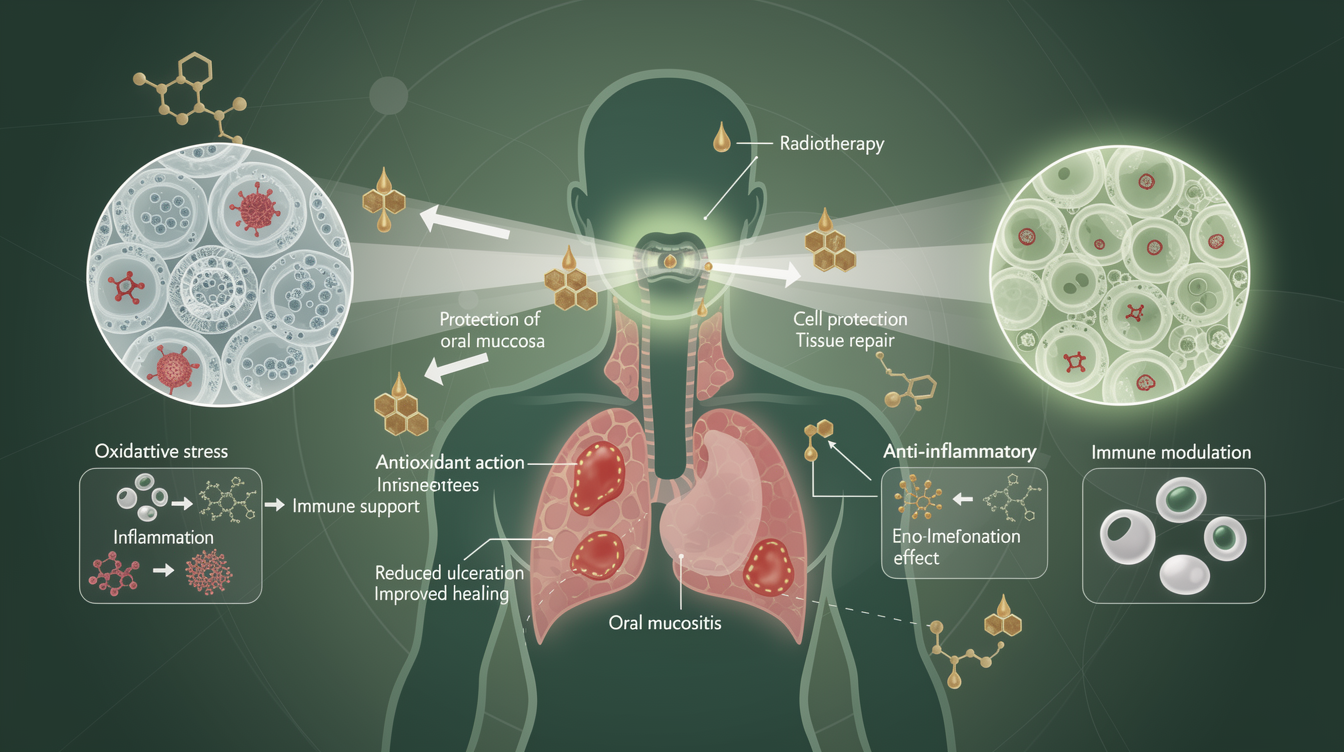
Oral mucositis affects nearly every patient receiving radiation for head and neck cancers. It starts as redness and swelling, then progresses to painful ulcers that can cover the entire mouth and throat. The condition doesn’t just hurt — it can lead to malnutrition, dehydration, and treatment delays that could compromise cancer outcomes.
The anti-inflammatory, antimicrobial, and tissue-healing properties of propolis made it an obvious candidate for researchers to investigate. What they found suggests this natural bee product may offer real relief for patients dealing with this challenging treatment side effect.
How This Applies to Your Daily Life
If you’re preparing for or currently undergoing head and neck radiation therapy, here’s what this research might mean for your treatment journey:
1. Time Your Propolis Use Strategically
The studies indicate propolis works best when used consistently, with peak benefits appearing around week three of treatment. This suggests starting propolis early in your radiation schedule — ideally with your oncology team’s approval — rather than waiting until severe mouth sores develop.
2. Consider Mouthwash Over Gel Formulations
Three of the four successful studies used propolis as a mouthwash rather than a topical gel. The liquid form allows for better coverage of all mouth surfaces and may be easier to use when swallowing becomes difficult. Look for standardized propolis mouthwash products or discuss preparation options with your healthcare team.
3. Don’t Replace Standard Care — Supplement It
While propolis showed promise in reducing severity, it’s not a replacement for established oral care protocols during radiation. Continue following your oncology team’s recommendations for mouth care, hydration, and nutrition while considering propolis as an additional supportive measure.
4. Plan for the Long Game
Oral mucositis typically worsens as radiation treatment progresses, often peaking in weeks 3-4. The research suggests propolis may help reduce this progression, but consistency is key. Prepare mentally and practically for several weeks of dedicated mouth care rather than expecting immediate relief.
What You Should Know Before Using Propolis
Dosage and Application:
The studies reviewed used varying propolis concentrations and application schedules. Most mouthwash formulations were used multiple times daily, typically 3-4 times per day. However, no standardized dosage has been established, which is why working with your healthcare team is essential.
Safety Considerations:
Research suggests propolis has a favorable safety profile for most users, but several important caveats apply:
- Bee allergy alert: Anyone with known bee, honey, or bee product allergies should avoid propolis entirely
- Quality matters: Propolis composition varies significantly based on geographic location and bee species, so product standardization is crucial
- Drug interactions: While not extensively studied, propolis may interact with certain medications
Who Should NOT Use Propolis:
- Patients with documented bee or bee product allergies
- Those taking blood-thinning medications (without medical supervision)
- Individuals with compromised immune systems (unless approved by oncology team)
- Children under 12 months (general propolis safety guideline)
Getting Medical Approval:
Before adding propolis to your radiation treatment routine, discuss it with your radiation oncologist and oral care team. They can help you choose appropriate products and timing that won’t interfere with your treatment protocol.
Frequently Asked Questions
Q: How quickly can I expect to see results from propolis for mouth sores?
A: The systematic review indicates that the most significant benefits typically appeared by the third week of consistent use. However, some patients may notice reduced inflammation and pain earlier. Remember that oral mucositis from radiation often gets worse before it gets better, so propolis may help prevent severity rather than provide immediate dramatic improvement. Consistency over several weeks appears to be key for optimal results.
Q: Can I make my own propolis mouthwash at home?
A: While it’s theoretically possible to create homemade propolis solutions, the clinical studies used standardized preparations with specific concentrations and quality controls. Homemade versions may have unpredictable potency and purity. For medical use during cancer treatment, it’s safer to use commercially prepared products that meet pharmaceutical standards or work with a compounding pharmacy that can create a standardized solution based on research protocols.
Q: Will propolis interfere with my radiation treatment effectiveness?
A: Current research suggests propolis doesn’t interfere with radiation therapy’s cancer-fighting effects. In fact, by potentially reducing oral mucositis severity, propolis might help patients complete their full radiation course without treatment delays. However, timing of application relative to radiation sessions should be discussed with your oncology team, as they may have specific preferences about what goes in your mouth before or after treatment.
Q: What’s the difference between propolis products I see in stores?
A: Propolis varies dramatically in composition depending on the plants bees visit, processing methods, and quality control measures. Some products contain very low propolis concentrations, while others may have additives unsuitable for cancer patients. Look for products specifically marketed for oral health, with clear propolis concentration information, and preferably those that have been tested for contaminants like heavy metals or pesticides.
Q: How much does propolis treatment typically cost compared to prescription mouth treatments?
A: Propolis products are generally much more affordable than prescription medications for oral mucositis. A month’s supply of quality propolis mouthwash typically costs $20-50, compared to hundreds of dollars for some prescription alternatives. However, insurance coverage varies, and some prescription options may be covered while propolis likely won’t be. The cost-effectiveness, combined with the favorable safety profile, makes propolis an attractive complementary option for many patients.
The Bottom Line
Research suggests propolis may offer meaningful relief for cancer patients dealing with radiation-induced mouth sores, with studies indicating reduced severity compared to placebo treatments. The evidence points to mouthwash formulations being most effective, particularly when used consistently over several weeks. While propolis appears to have a favorable safety profile and is significantly more affordable than many prescription alternatives, it should complement rather than replace standard oral care protocols during radiation therapy. The most important step is getting approval from your oncology team before adding any new treatment to your cancer care routine, especially since individual responses can vary and proper timing relative to radiation sessions may matter.
Authors: Pereira RCS, Bastos CM, Lima MHA, Oliveira JMS, França GM, Ferreira SMS