
If you’re one of the 10% of women dealing with endometriosis pain that feels like razor blades in your pelvis every month, you’ve probably wondered if there’s anything beyond prescription medications that might help. The cramping, bloating, and exhaustion can make even simple daily tasks feel overwhelming — and you’re not imagining how debilitating it really is.
Research suggests that certain dietary supplements may help manage endometriosis symptoms and reduce lesion size, though evidence quality varies significantly. A comprehensive 2026 review of 34 studies found that omega-3 fatty acids and N-acetylcysteine showed the most promise for pain relief and lesion reduction, while many popular supplements lack rigorous clinical trial support.
What the Research Discovered
This critical review examined the current state of dietary supplement research for endometriosis treatment, analyzing studies from multiple major medical databases through December 2025. The researchers found a mixed landscape of evidence — some supplements showing genuine promise, others falling short of expectations.
Key findings include:
- Pain reduction: Studies indicate omega-3 fatty acids and alpha-lipoic acid may help reduce endometriosis-related pain
- Lesion size: Research suggests omega-3, N-acetylcysteine, vitamin C, and epigallocatechin-3-gallate (EGCG) may decrease endometriotic lesion size
- Deficiency connections: Evidence shows that low levels of vitamins D and E, plus zinc deficiency, may be associated with increased endometriosis risk
- Research gaps: Many popular supplements lack high-quality randomized controlled trials (RCTs)
Study Overview:
| Study Detail | Information |
|---|---|
| Publication | Nutrients, April 2026 |
| Total Studies Reviewed | 34 studies |
| Quality Studies | Only 23 were randomized, placebo-controlled trials |
| Duration | Research spanning multiple years through December 2025 |
| Primary Outcome | Mixed results for supplement effectiveness |
The review revealed significant gaps in research quality. While 34 studies were included, only 23 met the gold standard of randomized, placebo-controlled trials. Several supplements that are commonly recommended — including vitamin E, zinc, alpha-lipoic acid, EGCG, and DIM (diindolylmethane) — had zero high-quality RCTs supporting their use for endometriosis.
Even more concerning, single studies evaluating vitamin C, magnesium, resveratrol, NAC (N-acetylcysteine), and PEA with PLD showed no confirmed effectiveness — meaning the initial promise didn’t hold up under rigorous testing.
How This Applies to Your Daily Life
Understanding this research can help you make more informed decisions about managing your endometriosis symptoms. Here’s how to practically apply these findings:
1. Focus on the Evidence-Based Options First
If you’re considering supplements, omega-3 fatty acids have the strongest research support. Studies indicate they may help reduce both pain and lesion size. Look for high-quality fish oil supplements providing at least 1,000-2,000mg of combined EPA and DHA daily. Take them with meals to improve absorption and reduce any fishy aftertaste.
2. Address Potential Deficiencies
Research suggests that vitamin D, vitamin E, and zinc deficiencies may increase endometriosis risk. Consider getting blood work to check your levels, especially vitamin D, which is easily tested and commonly deficient. If you’re low, targeted supplementation under medical guidance may be beneficial — not just for endometriosis, but for overall health.
3. Be Skeptical of Trendy Supplements
Despite social media claims, many popular endometriosis supplements lack solid evidence. Resveratrol, magnesium, and vitamin C showed no confirmed benefits in quality studies. This doesn’t mean they’re harmful, but don’t expect them to significantly impact your endometriosis symptoms based on current research.
4. Coordinate with Your Healthcare Provider
Since endometriosis is a complex condition requiring medical management, any supplement strategy should complement — not replace — your current treatment plan. Some supplements can interact with hormonal therapies or other medications commonly used for endometriosis management.
What You Should Know Before Taking Propolis
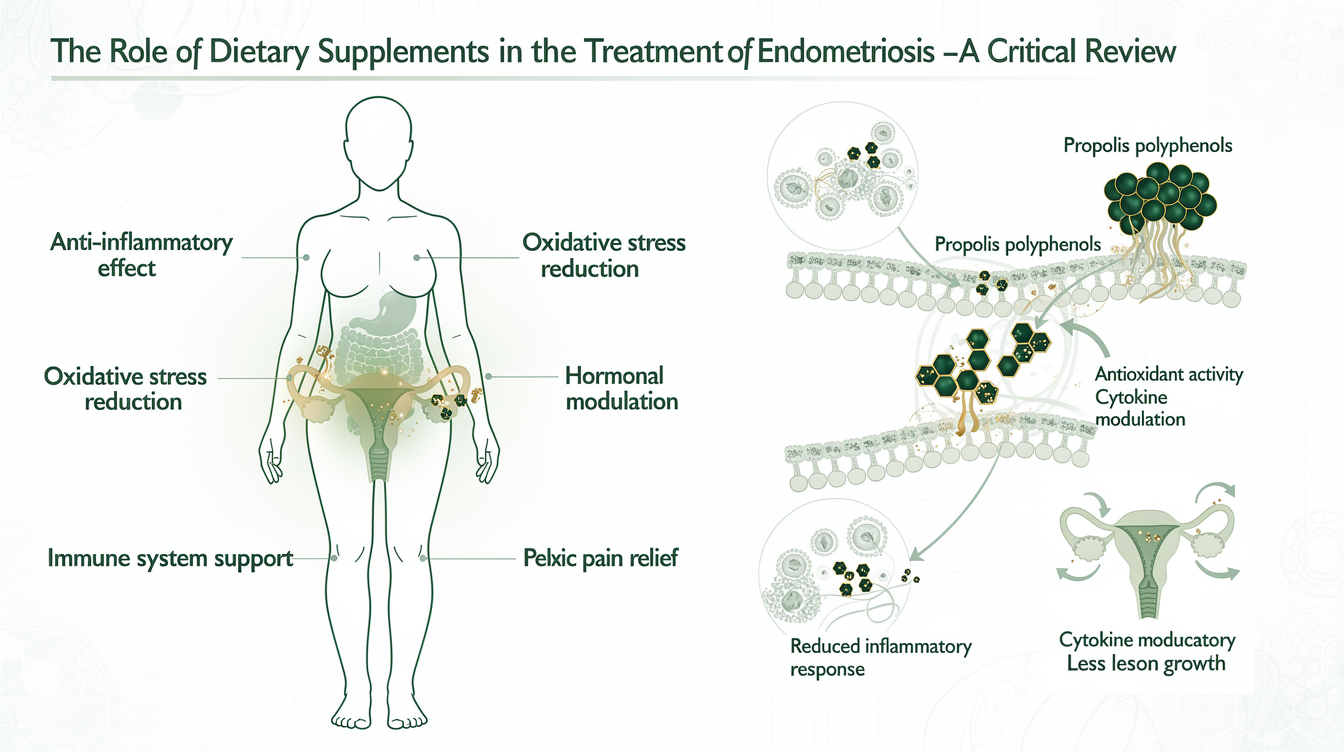
While this review didn’t specifically examine propolis for endometriosis, propolis research for other inflammatory conditions suggests it may have anti-inflammatory properties that could theoretically benefit endometriosis symptoms. However, no specific studies have evaluated propolis for endometriosis treatment.
General Propolis Considerations:
- Typical dosage: Research on propolis for other conditions uses 300-500mg daily, but no established dosage exists for endometriosis
- Safety profile: Generally well-tolerated, but allergic reactions can occur, especially in people with bee product allergies
- Drug interactions: May enhance the effects of certain medications, particularly blood thinners
Who should avoid propolis:
- Anyone with known bee product allergies
- People taking warfarin or other blood thinners (without medical supervision)
- Individuals with asthma (may trigger bronchospasm in sensitive people)
- Pregnant or breastfeeding women (insufficient safety data)
Always consult your gynecologist or healthcare provider before adding propolis or any supplement to your endometriosis management plan.
Frequently Asked Questions
Q: Which supplements actually work for endometriosis pain?
Research suggests omega-3 fatty acids show the most promise for pain reduction, with some studies indicating meaningful improvements in endometriosis-related discomfort. Alpha-lipoic acid also showed potential in preliminary studies. However, individual responses vary significantly, and these supplements work best as part of a comprehensive treatment approach rather than standalone solutions. The evidence is promising but not definitive enough to guarantee results for every person.
Q: How long do I need to take supplements before seeing results?
Studies that showed benefits typically required 3-6 months of consistent supplementation before participants noticed improvements. This timeline makes sense because endometriosis involves chronic inflammation and tissue changes that develop gradually over time. Don’t expect immediate relief — think of supplements as a long-term strategy rather than quick fixes. If you’re not seeing any improvement after 6 months of consistent use, it may be time to reassess your approach.
Q: Are expensive “endometriosis-specific” supplement blends worth it?
Based on this research, most commercial endometriosis blends contain ingredients with limited or no proven benefits for the condition. You’re likely better off focusing on individual, well-researched supplements like omega-3s rather than paying premium prices for proprietary blends. Many of these products include ingredients like resveratrol and magnesium that showed no confirmed benefits in quality studies. Read labels carefully and don’t be swayed by marketing claims.
Q: Can supplements replace my prescription endometriosis medications?
Absolutely not. While research suggests certain supplements may help manage symptoms, they cannot replace proven medical treatments like hormonal therapies, pain medications, or surgical interventions when necessary. Endometriosis is a serious medical condition that requires proper medical management. Think of supplements as potential complementary support, not primary treatment. Always work with your healthcare provider to develop a comprehensive treatment plan.
Q: Why do so many online sources recommend supplements that this review says don’t work?
Unfortunately, much online health information is based on preliminary animal studies, test-tube research, or low-quality human studies rather than rigorous clinical trials. What works in a laboratory or mouse model doesn’t always translate to real-world human benefits. This review specifically looked for high-quality, randomized controlled trials — the gold standard of medical research. Many supplement recommendations you’ll find online are based on much weaker evidence or theoretical benefits rather than proven results.

The Bottom Line
Research suggests that while dietary supplements may offer some support for endometriosis management, the evidence landscape is much more limited than many online sources would have you believe. Omega-3 fatty acids show the most promise for both pain reduction and lesion size management, while many popular supplements lack rigorous clinical trial support.
The key takeaway isn’t to avoid all supplements, but rather to approach them with realistic expectations and solid evidence as your guide. Focus on addressing potential nutrient deficiencies like vitamin D, consider omega-3 supplementation as part of a broader anti-inflammatory approach, and remain skeptical of expensive proprietary blends making bold claims.
Most importantly, remember that endometriosis requires comprehensive medical management. Supplements may serve as helpful adjuncts to proven treatments, but they’re not magic bullets for this complex condition.
Authors: Wójtowicz M, Małek P, Olszanecka-Glinianowicz M