
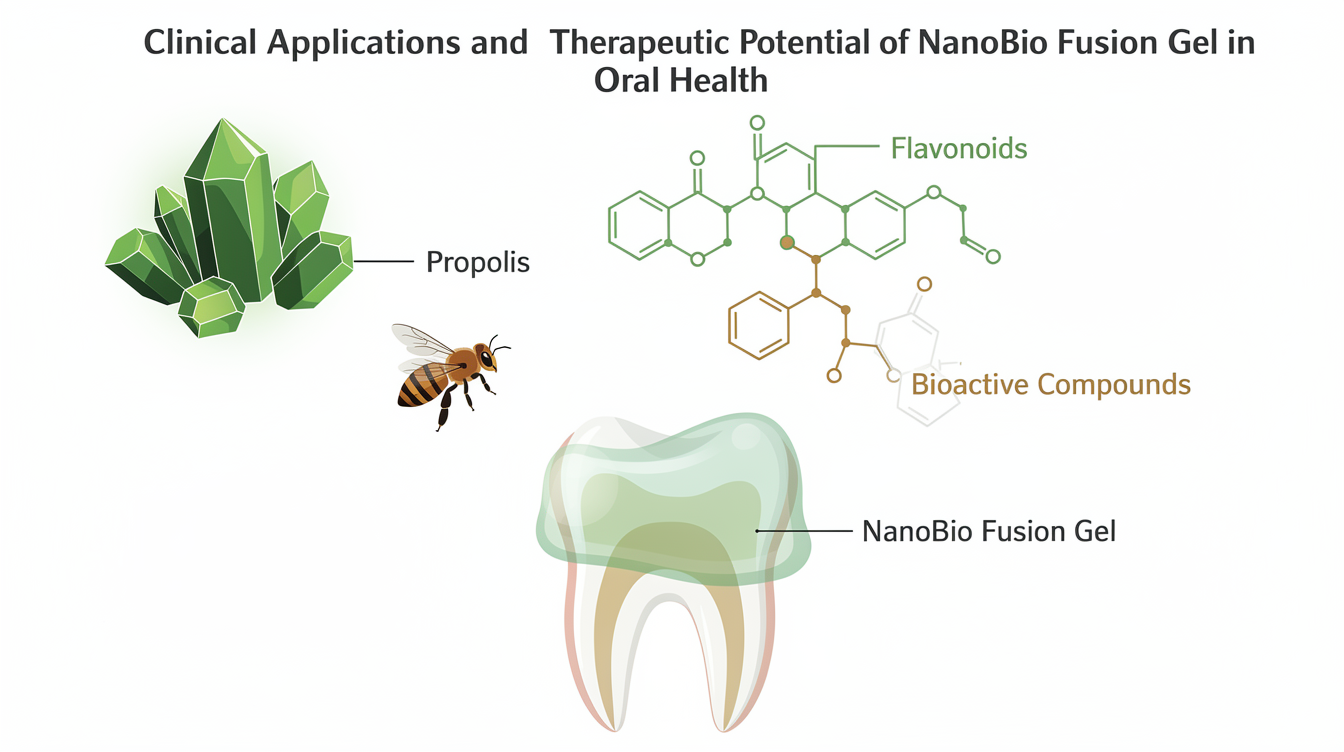
Nano-Bio Fusion Propolis Gel Shows Promise for Oral Health Issues
Swollen, bleeding gums don’t just ruin your morning routine — they can escalate into serious oral health problems that affect your entire wellbeing. If you’ve been dealing with persistent gum irritation, mouth sores, or post-dental surgery discomfort, you’re among millions searching for effective relief that goes beyond temporary fixes.
Research suggests that a specialized nano-formulated gel containing propolis, vitamin C, and vitamin E may offer significant support for various oral soft tissue conditions, with studies indicating improvements in gum health, wound healing, and pain management when used alongside conventional dental care.
What the Research Discovered
A comprehensive review from Semmelweis University examined 16 studies investigating Nano-Bio Fusion (NBF) gel — a bioadhesive oral treatment containing propolis, vitamin C, and vitamin E in a specialized nano-formulation. The researchers analyzed evidence for this gel’s effectiveness across multiple oral health conditions.
The key findings revealed that NBF gel may provide meaningful clinical benefits when used as an adjunct to standard periodontal therapy. Studies indicated improvements in several important measures:
- Plaque and gingival indices showed significant reduction
- Periodontal probing depth demonstrated measurable improvements
- Clinical attachment levels exhibited positive changes
- Wound healing processes appeared accelerated
- Pain-related outcomes showed notable relief
Beyond periodontal applications, research suggests the gel may support healing in oral surgery recovery, alveolar osteitis (dry socket), desquamative gingivitis, erosive lichen planus, and xerostomia-associated mucositis. Several studies reported outcomes comparable to conventional treatments, with the added benefit of natural bioactive ingredients.
| Study Details | Information |
|---|---|
| Publication | Gels journal, May 2026 |
| Study Type | Critical narrative review |
| Studies Analyzed | 16 relevant clinical studies |
| Key Ingredients | Propolis, Vitamin C, Vitamin E |
| Primary Outcomes | Gum health, wound healing, pain relief |
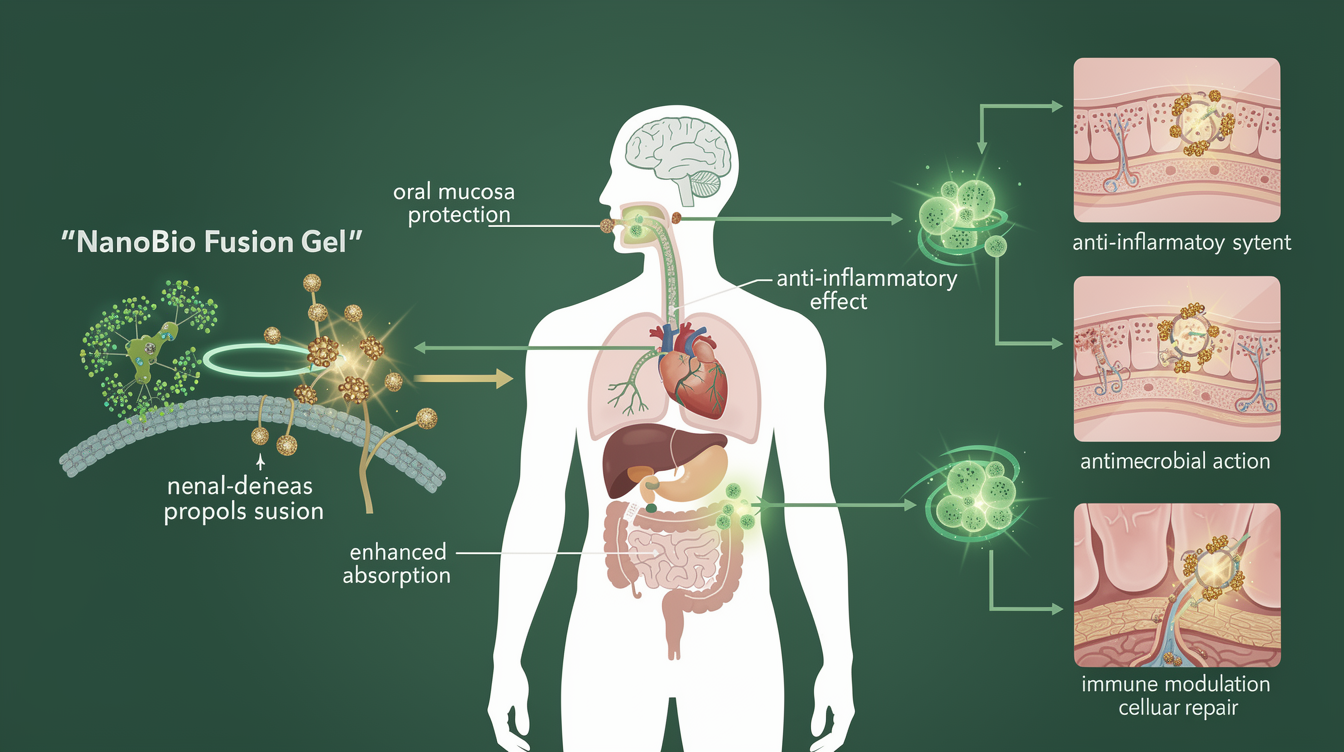
The nano-formulation aspect appears particularly significant, as it may enhance the delivery and bioavailability of the active compounds compared to traditional oral gels. Propolis, the primary bioactive ingredient, brings its well-researched anti-inflammatory and antimicrobial properties, while vitamins C and E contribute antioxidant support crucial for tissue healing.
How This Applies to Your Daily Life
Understanding how this research translates to real-world oral health challenges can help you make informed decisions about your dental care routine.
1. Enhanced Gum Disease Management
If you’re dealing with gingivitis or early periodontal disease, research suggests NBF gel may serve as a valuable addition to your regular brushing and flossing routine. The studies indicate that when used alongside professional dental cleanings and home care, the gel may help reduce inflammation more effectively than conventional approaches alone. This could mean less bleeding during brushing, reduced gum sensitivity, and potentially slower progression of periodontal issues.
2. Post-Surgical Recovery Support
Dental procedures — from simple extractions to more complex oral surgeries — often leave patients dealing with discomfort and delayed healing. The research indicates that NBF gel may support faster wound healing and pain management during recovery periods. This could translate to shorter recovery times, reduced reliance on pain medications, and lower risk of complications like dry socket formation.
3. Chronic Oral Condition Relief
For individuals suffering from persistent oral conditions like lichen planus or chronic dry mouth, the anti-inflammatory and healing properties of the gel may provide ongoing symptom management. Studies suggest the gel’s bioactive compounds may help reduce tissue irritation and support the natural healing processes that these conditions often disrupt.
4. Preventive Oral Health Maintenance
Even if you don’t currently have oral health issues, the research suggests that the gel’s antioxidant and anti-inflammatory properties may support overall oral tissue health. This could be particularly valuable for individuals with risk factors like diabetes, smoking history, or genetic predisposition to gum disease, potentially helping maintain healthier oral tissues over time.
What You Should Know Before Using Propolis-Based Oral Gels
While the research on NBF gel appears promising, there are important considerations before incorporating any propolis-based oral treatment into your routine.
Dosage and Application
The studies reviewed typically involved topical application directly to affected oral tissues, often 2-3 times daily or as directed by dental professionals. However, specific dosing protocols varied among studies, and optimal application frequency may depend on individual conditions and severity. Most research involved supervised use in clinical settings rather than over-the-counter self-treatment.
Safety Considerations
Research suggests that propolis-based oral gels are generally well-tolerated, but several important safety factors warrant attention. The nano-formulation may enhance absorption, potentially intensifying both beneficial and adverse effects. Some studies reported minimal side effects, but individual responses can vary significantly.
Who Should Exercise Caution
Certain individuals should consult healthcare providers before using propolis-based oral products:
- Bee product allergies: Anyone with known allergies to bee products, honey, or bee stings should avoid propolis-containing formulations
- Pregnancy and breastfeeding: Limited safety data exists for nano-formulated propolis products during pregnancy and lactation
- Medication interactions: Propolis may interact with blood-thinning medications or immunosuppressive drugs
- Autoimmune conditions: Individuals with autoimmune disorders should seek professional guidance due to propolis’s immune-modulating effects
- Children: Safety and appropriate dosing for pediatric populations require professional evaluation
Professional Supervision
The research emphasizes that NBF gel showed benefits primarily when used as an adjunct to conventional dental care, not as a replacement. Regular dental evaluations remain essential for monitoring oral health progress and adjusting treatment approaches as needed.
Frequently Asked Questions
Q: How does nano-formulation make propolis more effective in oral care?
A: Nano-formulation involves reducing active ingredients to microscopic particles, which research suggests may enhance their ability to penetrate oral tissues and maintain longer contact time. In the case of NBF gel, this technology may allow propolis, vitamin C, and vitamin E to reach deeper into gum tissues and stay active longer than conventional formulations. The bioadhesive properties also help the gel remain in contact with oral tissues rather than being quickly washed away by saliva, potentially extending the therapeutic benefits.
Q: Can this gel replace regular periodontal treatment from my dentist?
A: Absolutely not. The research consistently shows that NBF gel provides benefits when used alongside conventional periodontal therapy, not as a replacement. Professional dental cleanings, scaling and root planing, and other established treatments remain the foundation of periodontal care. The gel appears to enhance these treatments by supporting the healing process and potentially reducing inflammation, but it cannot substitute for professional intervention, especially in moderate to severe periodontal disease cases.
Q: How long does it typically take to see improvements in gum health?
A: Based on the studies reviewed, timelines for improvement varied depending on the specific condition and severity. Some research indicated noticeable changes in inflammation and discomfort within days to weeks, while improvements in deeper periodontal measurements like probing depth and clinical attachment levels typically required several weeks to months of consistent use. Individual responses varied significantly, and factors like overall health, oral hygiene compliance, and severity of initial conditions influenced outcomes.
Q: Are there any specific oral conditions where this gel should be avoided?
A: While the research generally supports safety for most oral soft tissue conditions, certain situations may require special consideration. Individuals with active oral infections that require antibiotic treatment should address the infection first. Those with severe periodontal disease may need more intensive professional intervention before considering adjunctive treatments. Additionally, any undiagnosed oral lesions or persistent symptoms should be professionally evaluated before self-treatment, as some conditions may require specific medical management.
Q: How does this compare to other natural oral health treatments?
A: The research specifically examined NBF gel’s unique combination of nano-formulated propolis with vitamins C and E, making direct comparisons to other natural treatments difficult. However, the studies suggested that the gel’s outcomes were comparable to some conventional treatments while offering the potential benefits of natural bioactive compounds. The nano-formulation and bioadhesive properties may provide advantages over simple propolis tinctures or other natural oral care products, but more comparative research would be needed to definitively establish superiority over alternative natural approaches.
The Bottom Line
Research suggests that Nano-Bio Fusion gel containing propolis, vitamin C, and vitamin E may offer meaningful support for various oral health challenges when used alongside conventional dental care. The evidence indicates potential benefits for gum disease management, post-surgical healing, and chronic oral conditions, with studies showing improvements in inflammation, wound healing, and pain management. However, this technology should complement, not replace, professional dental care, and individuals with bee product allergies or certain medical conditions should consult healthcare providers before use. While promising, more extensive clinical trials will help establish optimal protocols and long-term safety profiles for this emerging oral health approach.
Authors: Kammerhofer G, Nagy ÁT, Joób-Fancsaly Á, Szmirnov G, Szmirnova I, Végh D, Kivovics M, Szabó G, Németh Z